
Smoked grey mirrors (often designated in architectural schedules as Euro Grey, silvered smoked float glass, or graphite mirror) are among the most versatile decorative elements in high-end commercial interiors, boutique hotel bathrooms, and contemporary residential joinery. By moderating the blinding reflection of traditional chrome mirrors with a neutral charcoal tint, a grey mirror texture adds mood, sophistication, and atmospheric reflection depth to any 3D rendering. Yet, 3D artists frequently misjudge how grey mirrors process scene light. Setting a basic metallic material with a flat grey diffuse color turns sleek architectural glazing into dull, unpolished sheet metal.
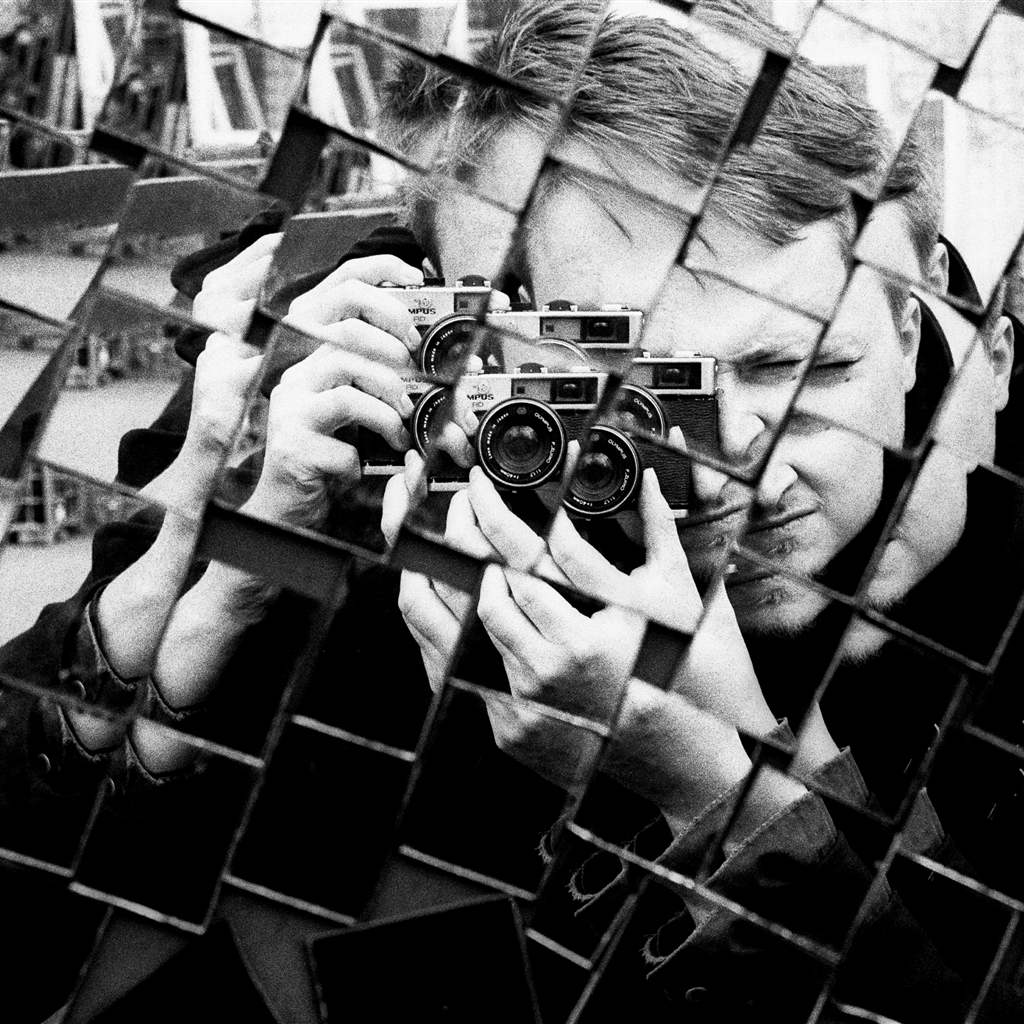
Authentic grey mirror textures combine a crisp front-surface dielectric specular reflection with internal smoked glass light absorption over a reflective silvered back layer.
To render an authentic grey mirror, you must respect the physical reality of architectural glass manufacture. A grey mirror is not simply tinted metal. It consists of a soda-lime float glass pane infused with trace iron and cobalt colorants, backed by a micro-thin layer of metallic silver and dark protective backing paint. Below is the full technical pipeline for configuring volumetric smoked glass absorption, managing surface imperfections, and authoring seamless grey mirror shaders in Blender, Unreal Engine 5, and V-Ray.
Optical Ray Tracing of Smoked Grey Mirrors
Understanding how a photon bounces through an architectural smoked mirror determines your shader node architecture:
[Light Path Through Smoked Grey Mirror]
Incident Ray ──> [Front Boundary: Air / Float Glass (IOR 1.52)] ──> ~4.2% Dielectric Specular Reflection
                      │
                      ▼ (Transmitted Ray)
                 [4mm - 6mm Smoked Float Glass Body] ──> Neutral Gray Wavelength Attenuation (Beer-Lambert)
                      │
                      ▼
[Chemical Silver Layer (Metallic 1.0)] ──> Near-Total Reflection (Travels back through glass)- Dielectric Front Boundary (Fresnel Specular): When light strikes the polished outer surface, it reflects according to dielectric Fresnel physics at an Index of Refraction of
1.518 – 1.525. At perpendicular angles, approximately 4.2% of light reflects with clear, untinted specular clarity. At acute grazing angles, reflectivity climbs toward 100%. - Volumetric Smoked Absorption: The remaining 95.8% of light enters the glass matrix. In Euro Grey glass, dissolved metal oxides absorb light evenly across the visible spectrum, reducing overall brightness by 40% to 70% depending on pane thickness (
4mmvs6mm). This double-pass absorption gives grey mirrors their signature soft, muted reflections. - Rear Metallic Silvering: The back of the glass is coated with metallic silver (
Metallic 1.0,Roughness ~0.005). Light bounces off this layer and passes back through the tinted glass body before exiting toward the camera. - Beveled Edge Polishing: Architectural mirror wall installations feature beveled perimeter chamfers (
2mm – 4mmwidth) ground and polished at a 15-degree to 45-degree angle. Without capturing these edge chamfers in normal maps, multi-panel mirror walls appear as flat, non-dimensional planes.
PBR Grey Mirror Calibration Matrix
Use this calibration matrix to configure physical shaders across prominent architectural grey mirror finishes:
| Grey Mirror Variety | Base Color (RGB Hex) | Metallic | Specular IOR | Roughness Range | Normal Map Style | Volumetric Absorption / Tint |
|---|---|---|---|---|---|---|
| Euro Grey Smoked (Clean) | #3A3C3E (Neutral slate) | 0.88 - 0.94 | 1.520 | 0.012 - 0.030 | Flat with 2mm edge bevel | Neutral cool grey absorption |
| Graphite Dark Mirror | #222426 (Deep charcoal) | 0.85 - 0.92 | 1.525 | 0.015 - 0.035 | Microfiber horizontal wipe | Heavy density absorption (0.85) |
| Antiqued Foxed Grey Mirror | #45484B (Pewter grey) | 0.60 - 0.80 | 1.515 | 0.060 - 0.220 | Desilvering pit and corrosion | Localized chemical oxidation |
| Frosted Satin Grey Mirror | #5E6266 (Muted mist grey) | 0.45 - 0.65 | 1.518 | 0.280 - 0.450 | Acid-etched micro-grain | Velvety surface diffuse scatter |
| Fluted Ribbed Grey Mirror | #343638 (Smoked graphite) | 0.88 - 0.93 | 1.530 | 0.015 - 0.040 | Half-round vertical flute normal | Directional cylindrical warp |
Note: In production game engines, approximating two-layer glass with a single PBR shader setting Metallic: 0.90, Roughness: 0.02, and Base Color: #3A3C3E saves GPU memory while delivering 95% of true ray-traced accuracy.
Step-by-Step: Building an Architectural Grey Mirror Shader
Follow this production workflow in Blender Principled BSDF or Unreal Engine 5:
-
Author the Edge Chamfer and Joint Normal Map: For modular wall panels, generate a tileable normal map featuring a crisp
2mmchamfer along panel perimeters with a thin1mmsilicone shadow gap. In Blender, blend this normal map with a Cycles Bevel node to ensure corners catch bright specular glints. -
Calibrate Base Color Values: Set Base Color to a neutral, desaturated grey such as
#3A3C3E(linear RGB0.20, 0.21, 0.22). Avoid strong color tints unless matching warm bronze or cool blue variants; Euro Grey glass is prized specifically for its neutral chromatic attenuation. -
Layer Microfiber Wipe Marks into Roughness: Completely uniform roughness destroys realism. Sample a subtle surface imperfection texture:
- Remap the texture using a Map Range node between
0.012(ultra-clean polished mirror) and0.035(faint evaporated cleaning streaks). - Orient the streaks horizontally, mimicking the motion of commercial window cleaning squeegees.
- Remap the texture using a Map Range node between
[Blender 4.x Calibrated Grey Mirror Shader Setup]
(Base Color: #3A3C3E - Euro Grey) ──> [Principled BSDF: Base Color]
(Wipe Imperfection: 0.015 - 0.035) ──> [Principled BSDF: Roughness]
(Metallic: 0.90) ───────────────────> [Principled BSDF: Metallic]
(IOR: 1.52) ────────────────────────> [Principled BSDF: IOR]
(Edge Chamfer Normal) ──[RNM]───────> [Principled BSDF: Normal]
(Float Glass Perlin Wave Normal) ───┘-
Incorporate Low-Frequency Float Waves: Large commercial mirror lites exhibit slight cooling distortion from float glass manufacture. Blend a low-frequency procedural Perlin wave (
Strength: 0.02 – 0.04, scale0.5m) into the normal map using Reoriented Normal Mapping (RNM). Straight reflected architectural lines will gently undulate, grounding the mirror in physical reality. -
Tune Real-Time Reflection Probes and Lumen Settings: In Unreal Engine 5, ensure your Post Process Volume reflection settings are configured for high-gloss materials:
- Set Lumen Reflection Quality to
2.0. - Ensure reflection ray tracing is enabled for translucent and high-metallic surfaces.
- For enclosed bathrooms with point-light vanity fixtures, enable High Quality Mirror Reflections in Lumen settings to avoid low-resolution spherical reflection captures.
- Set Lumen Reflection Quality to
Creating Custom Grey Mirror Textures and Normal Maps
Manually painting tileable edge chamfers, bespoke acid-etched fluting, and subtle mirror wipe patterns in 2D raster editors easily produces blurry normal gradients and harsh edge stepping. AI-assisted and procedural texture tools compute mathematically continuous height derivatives that preserve pristine specular highlights under real-time lighting.
If you need to generate production-ready smoked grey mirror normal maps, surface imperfection masks, and contemporary architectural PBR textures, power up your visualization pipeline with our Free Online Normal Map and PBR Generator — Try Smoked Grey Mirror. You can also generate seamless tileable smoked mirror wall surfaces for large commercial interiors using our Seamless Texture Generator Online.
Grey Mirror Production Checklist
- Base Color set to neutral Euro Grey (
#3A3C3Eto#424548), avoiding saturated brown or blue casts. - Single-shader approximation uses calibrated
Metallic: 0.88 - 0.94to balance glass Fresnel and silver backing. - Panel perimeter chamfers (
2mm - 4mm) captured via baked or procedural bevel normal maps. - Low-frequency float glass waves kept minimal (
Strength: 0.02 - 0.04) to prevent excessive image distortion. - Roughness constrained within
0.012 - 0.040to maintain sharp specular reflections with realistic micro-wear. - Real-time reflection passes tuned in UE5 Lumen to resolve crisp reflection details.
Related reading: Black Tinted Mirror Texture Guide · Bronze Mirror Texture Seamless · Window Normal Map Guide · Transparent Textures Rendering Guide